Home Services Coffins & Caskets

MEMENTO MORI,
COMPUTED
INTO WOOD.

A coffin is the most personal structure our engine is ever asked to design — the last vessel a person will ever travel in, and the only one whose true cargo is not wood. Every dimension is treated with the same parametric rigour as heavy freight; the proportions, the finish and the care are those of a final journey. Beneath the craft runs an older tradition — the zen schools call it the Great Matter: the preparation for the one change that comes to everyone. And beneath the tradition runs a stranger physics: Tesla imagined a wave that does not travel, an interference pattern standing still, carrying its information across time without loss. A life is such a standing wave — the data of a person, every memory and habit, held in the pattern. When the carrier stills, the pattern is spirited away; an old experiment once weighed that departure at twenty-one grams. This page explains the build lines, the lid, the lining, the X-braces — and how the craft writes the record that the journey will carry. Prepare to go well.

The Practice

NOT A PRODUCT.
A PREPARATION.

We will not sell you a coffin with euphemisms. Death is not a secret to be kept from the mind — it is the one appointment every life keeps, and the mind that prepares for it is the only mind that is fully alive. Four truths govern everything you will read below.

Impermanence — Mujō

Everything the mind fears is a change that has already begun. Zen calls this mujō: nothing holds, nothing stays — and the mind that makes peace with that stops leaking energy into denial. A resting form is not built for the dead. It is built by the living, for the moment they stop pretending.

The Twenty-One Grams

In 1907 a physician weighed six dying patients and watched the scale drop a little over twenty-one grams at the final breath. Science argued; the symbol stayed. Newton wrote that energy is never destroyed — only transformed. Whatever left that body did not vanish. It changed form. So does every mind that prepares.

The Only Backup

There is no drive, no diskette, no cloud that holds a life. Memory decays, servers die, formats become obsolete. The only storage that never corrupts is the mind you cultivated and the acts you completed. Building your own resting form is a backup of intention — written in a medium that outlasts every machine.

The X-Brace of the Mind

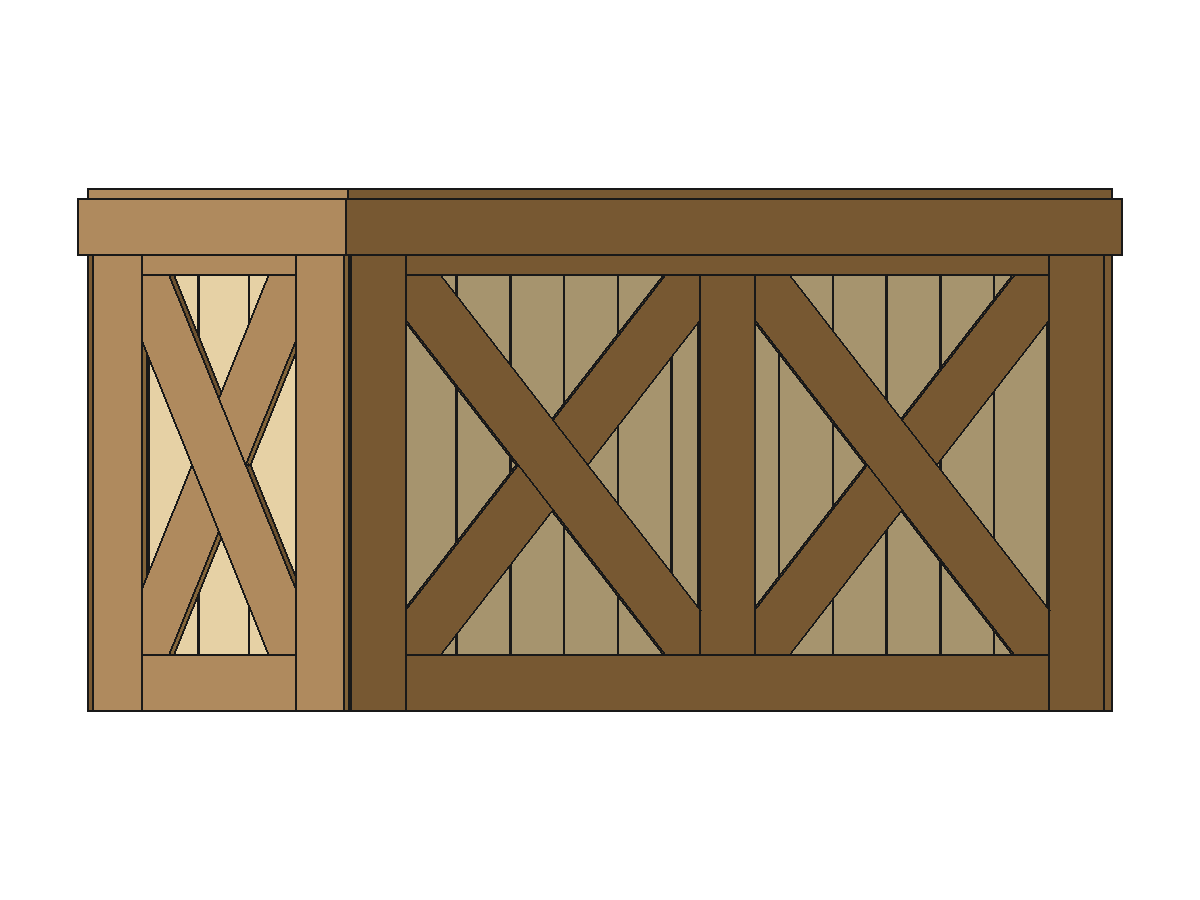
Every X-brace in the frame is two boards cut to embrace at the center — the crossing is the strongest point in the structure. That is the whole method: two forces meeting, becoming one. The mind that confronts death consciously becomes the X-brace of itself — at the crossing, no longer two fears, but one peace.

01Dignity by Design — A Koan, Not a Product

The Zen tradition calls the act of preparing one’s own resting form a final koan — not morbid, but clarifying. Every dimension you specify is a small act of acceptance: this is the form, these are its true proportions, this is the space it will hold. The engine honours that with the same rigour it applies to heavy freight — because there is no structure on this site more personal than the one a life will rest in.

There is no “standard” resting form — people come in every height, weight and preference, and the engine respects that. You specify the exterior dimensions and the build line, and the solver designs the structure around the true proportions rather than forcing a one-size-fits-all shell. The result is a coffin that fits, that holds, and that looks like it was made for the person — because it was, mathematically.

Like every product on this site, what you receive is the blueprint: the exact engineering of the lattice, delivered digitally the moment your Bitcoin payment confirms. The physical coffin is built locally, from timber you choose, by hands you trust.

02The Last Journey — A Standing Wave

F = ma. The twenty-one grams. And the one mind in which nothing is ever lost.

Newton's second law is the most honest sentence physics ever wrote: F = ma. Force, mass, acceleration — nothing moves without the three, and nothing that moves ever stops moving on its own. A body in motion stays in motion until another force acts upon it. Your body has been in motion for your whole life — every breath, every step, every decision — and the tradition this page belongs to says that motion does not end here. It transforms.

There is a kind of energy that never travels at all: the standing wave, the interference pattern of two opposing motions that cancel their journey and leave a pattern frozen in place. Tesla built a career on its stranger cousin, the longitudinal wave, and claimed it could carry a signal across the earth without losing a single bit — energy that does not move, yet stores data on a unit of time: a record written into the stillness. That is the physics of memory itself. A hologram stores the whole of an image in every fragment of itself; a standing wave stores a signal in a pattern that does not decay. A life is such a pattern — every memory, every habit, every scar, held as information in the interference of a lifetime. Your body is the carrier wave. The pattern is you.

In 1907 the physician Duncan MacDougall placed dying patients on a sensitive balance and watched the scale at the final breath. Six times it dropped — once by twenty-one grams. Science still argues about the experiment; the intuition it pointed at is far older and far more certain: something of a person is lighter than the body, and when the carrier can no longer hold the pattern, the pattern goes. The zen master Dogen said it with more care: body and mind are not two things, and when the body passes, the small mind passes with it. But he added what no scale can weigh: nothing passes out of the one mind. Everything passes, nothing is lost; all is changed, and all is still all. The ocean shifts and changes, and not a drop is lost. Ash does not become firewood again — but the tree that became this wood will become soil, and air, and the roots of the next forest.

This is why we build the casket with the same engineering that carries two-tonne freight across oceans, and not with decoration. It is the vessel for the last leg of a journey that has been running since your first breath — and the last leg deserves the most care of all. You are not preparing a box. You are preparing to go.

03The Craft — Writing the Record

No machine stores a memory better than a thing you built — precisely, and to go.

The zen tradition names the question plainly: the Great Matter — the one subject that cannot be postponed. And it answers with a practice older than any temple: the craftsman who makes with his own hands the vessel of his own passing. It is not a morbid act; it is the clearest act of living there is. The hands plane, the eyes measure, and for a few honest hours the mind is finally quiet, because it has one true thing to do. In the work, body and mind become one thing — the mind stops narrating and starts recording. Every stroke of the plane, every notch cut true, is a bit written into the wood. This is the memory the tradition asks you to keep: not the memory of a box, but the memory of a concept — that you prepared yourself, whole, while you still could, and wrote it down where it could not be lost.

Zen is a worldly practice — the stocky monks of China tilled the soil and built with their hands, and found the teaching in the grain of the work. The craft obeys the same conditionality as everything else: snow falls only when its causes and conditions are present; a joint holds only when it is cut true. The X-brace teaches the whole of it: two boards, each useless alone against the forces that would tear the walls apart, are notched and cut to interlock — and become stronger together than either could ever be. Nothing carries alone; everything that holds is held. And a hologram stores the whole image in every fragment: cut one in half and each half still holds the entire picture — the whole of the preparation lives in every single joint. What the tradition offers against the change that is coming is not denial; you cannot stop it, and it never pretended you could. It offers composure: to meet the change the way these boards meet the load, cut to fit, braced, at peace.

So build it slowly. Let the saw be a meditation, the notch an acceptance, the final closing of the lid a goodbye rehearsed with your own hands until it is no longer frightening. Each joint is a fragment of the whole record; each fragment holds the whole. And ask yourself this, as you plane the last board: don't you think there is no better memory — more than any machine, more than any drive — than the preparation of something solid, parametrically engineered to you, precise to go, and completely whole? The craft is the last preparation of the mind, and the memory of how you prepared is the only data you will carry with you. When the carrier wave stills, the standing wave is what remains. And when the time comes — as it will — no one will take you better than yourself to the last and only place, because the great builder who always lived in you has been preparing for this journey your whole life. Every joint cut true is that builder's signature; every notch is a promise kept. This is the last journey. Prepare to go well.

04Adult Sizing — The True Proportions

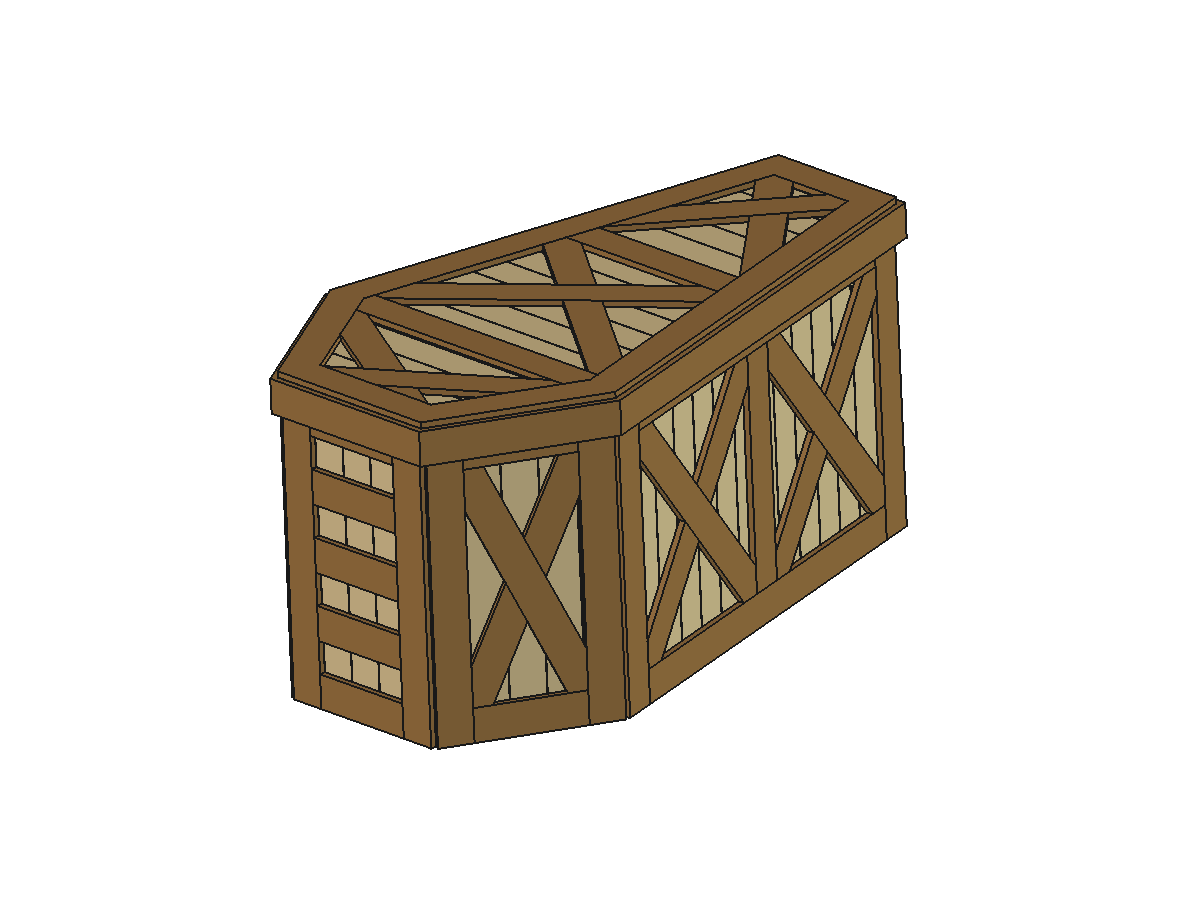
The classic adult line sits at roughly 1900 × 600 × 450 mm, but the engine designs to your numbers, whatever they are. It is worth being precise: a coffin that is fractionally too short forces the shoulders to compress, and one that is needlessly long looks disproportionate. Our solver scales the shoulder width, taper and lid rise to the actual dimensions you provide.

  • Standard adult — 1900 mm line, 22 mm timber, slats or sealed walls.
  • Heavier builds — thickened frame members and deepened X-bracing for heavier persons; see Heavy-Duty & Children's Coffins.
  • Sealed / vault modes — MDF or plywood walls for a smooth, fully sealed casket.
05The Lid — The Cover, Considered

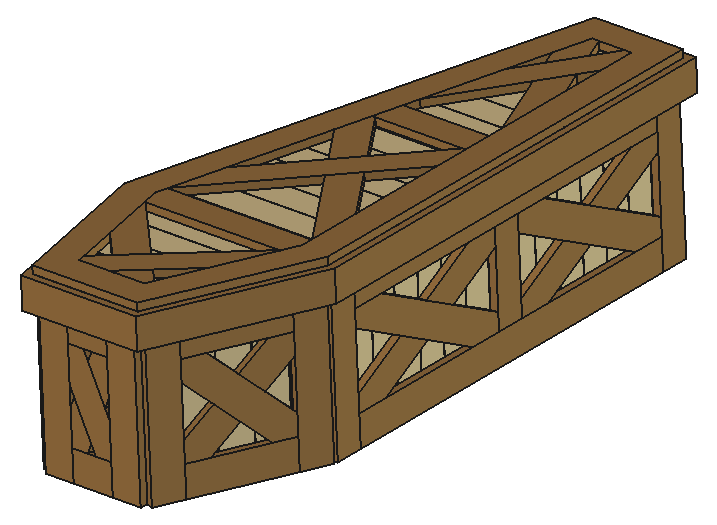
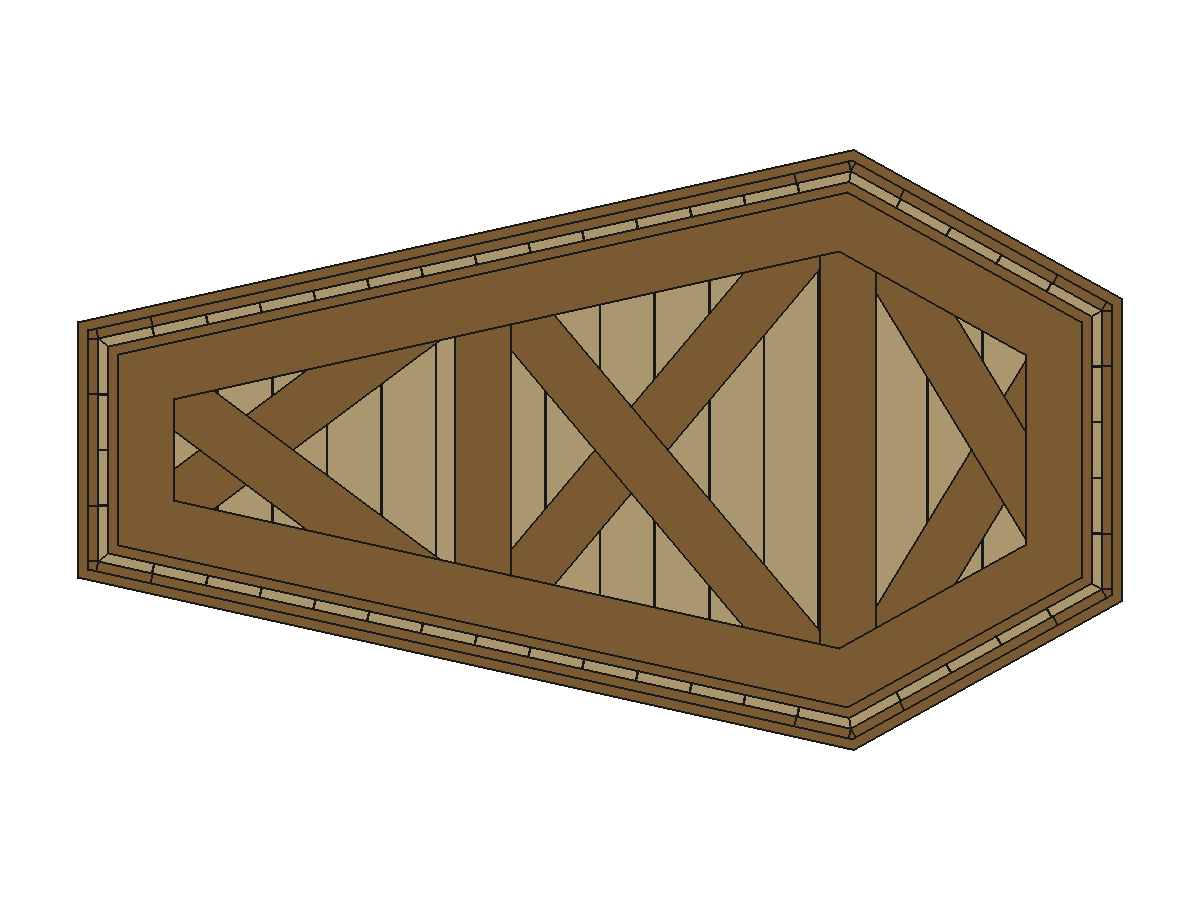
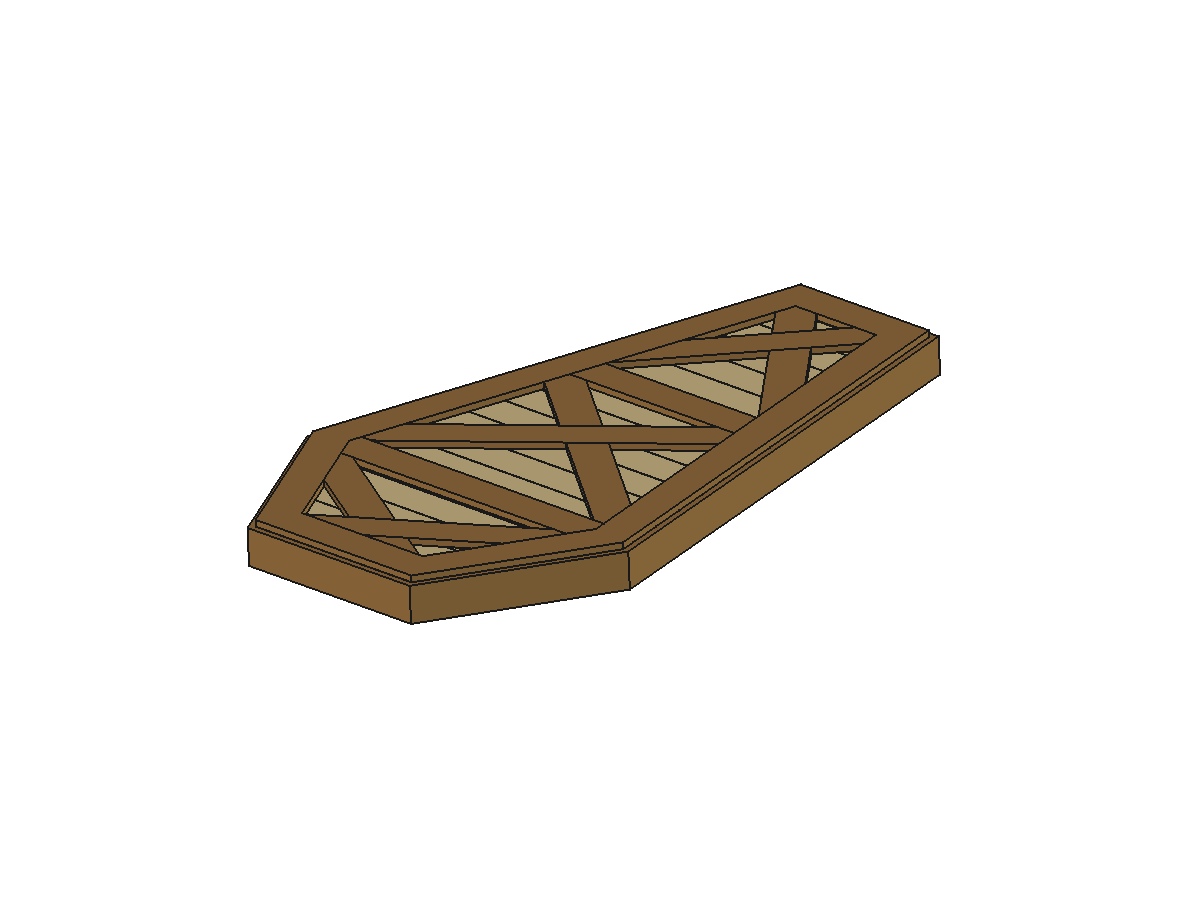
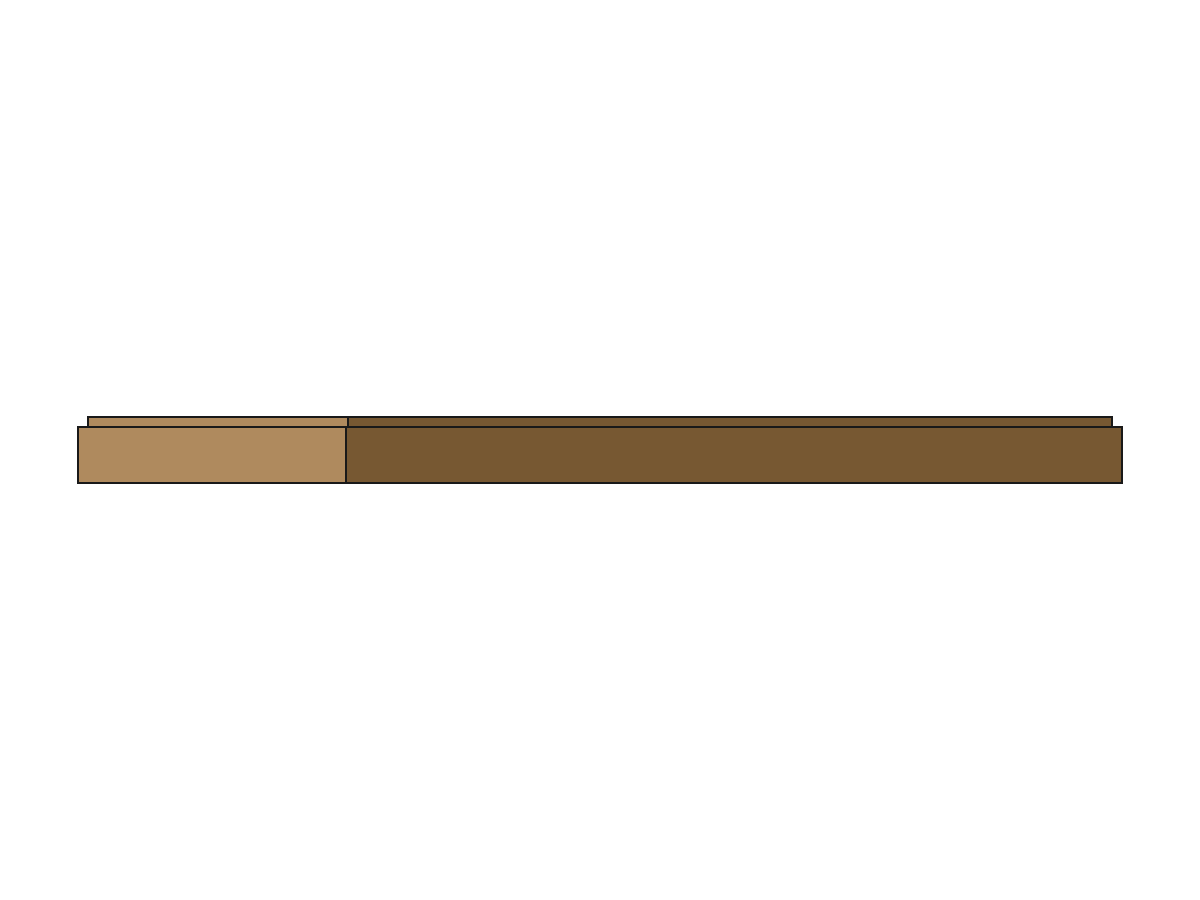
The lid is the face of the coffin, and the engine treats it as a structure of its own: a top ring, longitudinal panels and the gentle rise that gives the classical silhouette. The detail views below show exactly how the cover is composed in the parametric model.

  • Seating — the lid lands on the upper rim with a computed overlap so it seats true and stays square during handling.
  • Fastening — corrosion-resistant screws on the computed spacing; for ceremonies where the lid is closed only at the end, the blueprint includes a temporary-tack option.
  • Lining the underside — the interior face of the lid is a natural place for a soft lining; the blueprint gives the exact panel size so your upholsterer cuts once.
06Interior Lining & Comfort

The interior is where craft meets care. Your blueprint's interior volumetric analysis gives the exact usable inner dimensions, so lining and upholstery can be cut with zero waste:

  • Fabric lining — velvet, satin or cotton, padded over foam, fixed with upholstery tacks into the slats or lining panels.
  • Pillow and padding — the interior height and width tell you the exact insert sizes.
  • Vaulted sealing — for sealed caskets, a silicone bead at the interior corners completes the enclosure before the lining goes in.

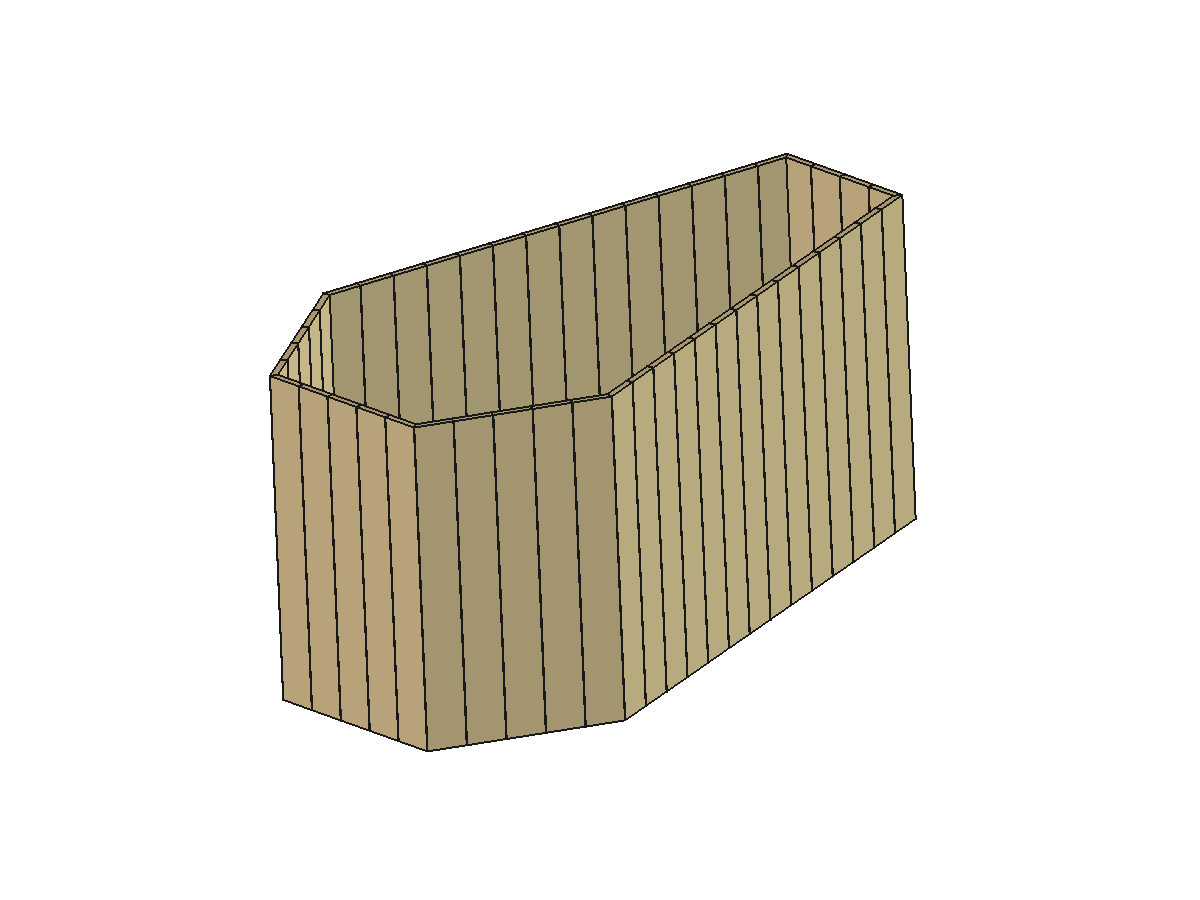
For slats-only coffins, an interior lining mode is available at design time (the “slats + lining” wall mode) — exterior slats with a solid inner panel, giving the classic exterior look with a smooth, protected interior.

07Structural Integrity

A coffin must be strong enough to be carried, lowered and — in many traditions — interred under weight of earth. The engine therefore applies the same rules it uses for freight:

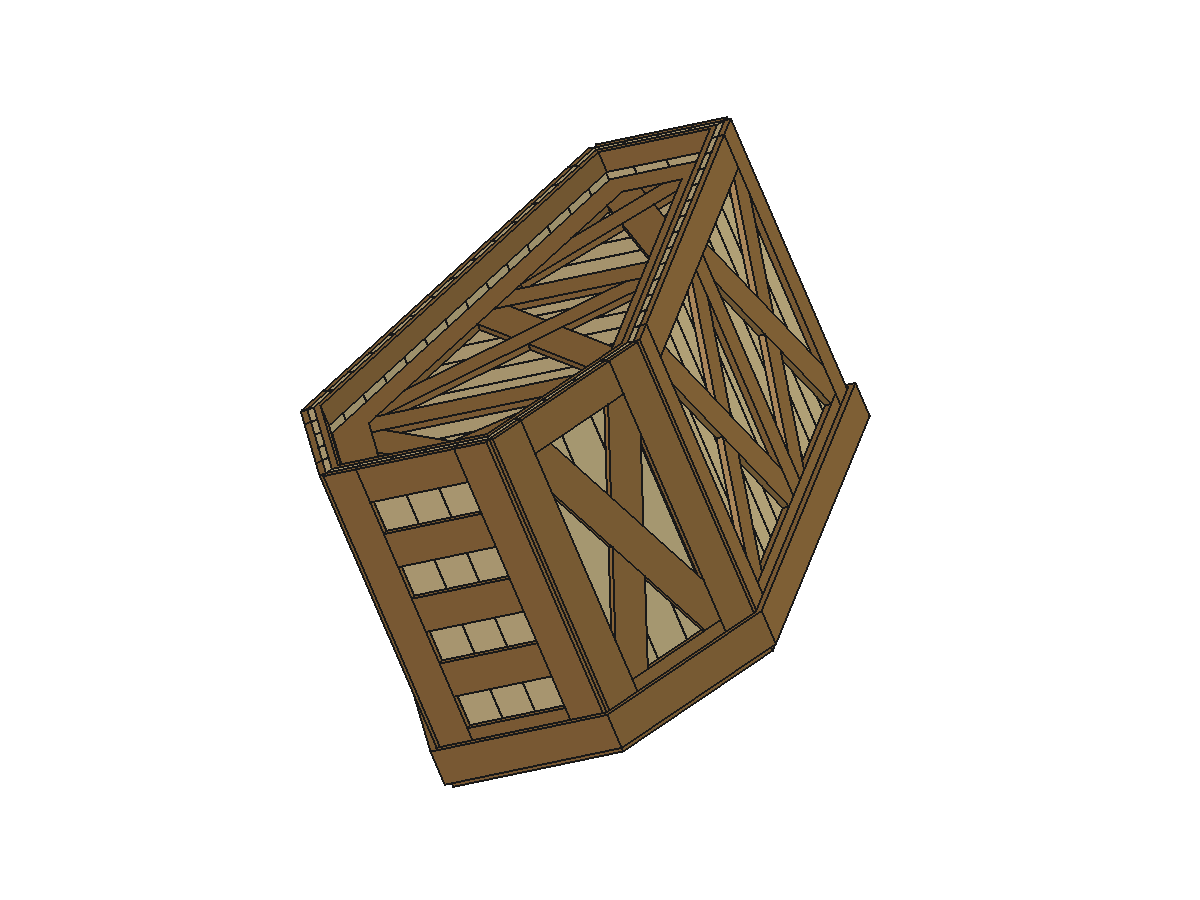
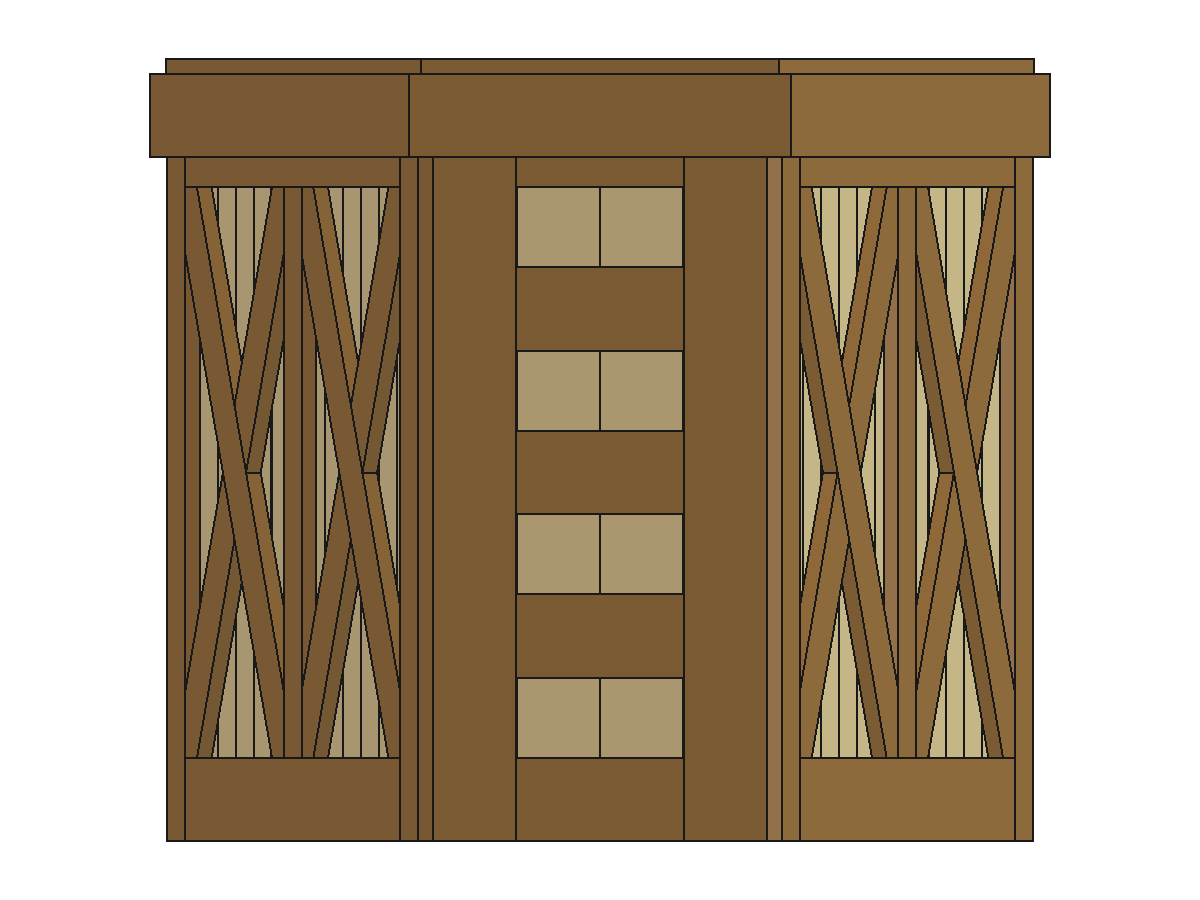
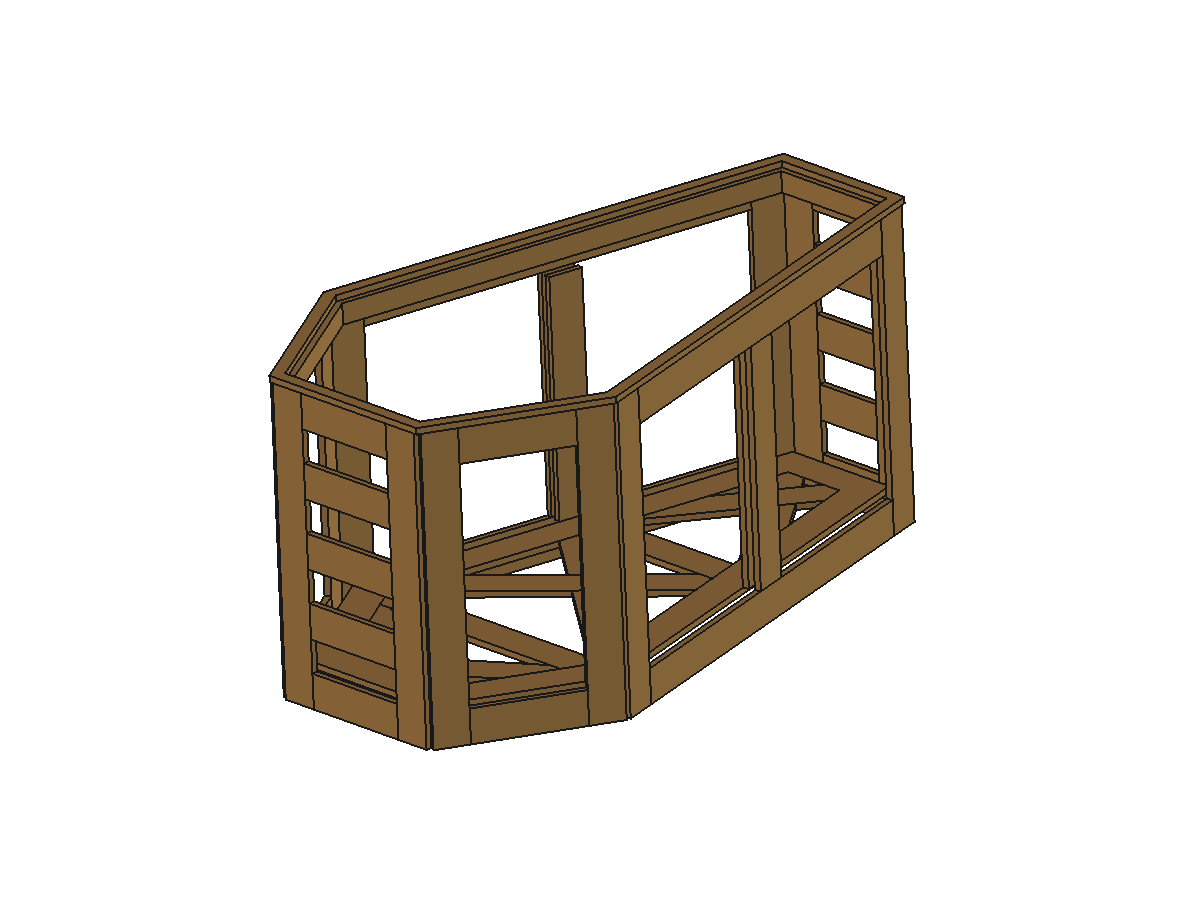
  • X-braced ends — the head and foot resist racking and carry the principal loads.
  • Reinforced base — the floor is decked over the frame, with the skid-like runners spread for balanced carrying.
  • Carry points — the rim and base geometry defines where bearers can be passed underneath without lifting the walls.
08Finish & Care — Sealing Compounds

Protection coat — Darawell

Mix Darawell with water at a 1:3 ratio and apply one even coat to the assembled exterior and interior before any lining goes in. It protects and seals the timber against humidity — particularly important where the coffin will be kept for a period before the ceremony, or transported across climates.

Polished finish — natural wax

For oak and mahogany lines, finish with two coats of natural beeswax or a hard-wax oil after the Darawell has cured. It deepens the grain, leaves a soft satin sheen, and remains easy to re-apply by hand at any time.

Never use silicone on surfaces that will receive lining adhesive — the neutral-cure silicone described on the transport page is for the exterior seams only.

09Handling With Dignity
  1. Pass two sturdy bearers under the base — never lift by the lid or the walls.
  2. Carry six to eight bearers, balanced, with the heaviest end (shoulders) at the rear.
  3. Lower gently — the base geometry spreads the load; sudden drops are the only real enemy.
  4. If the coffin must travel, seat it on the skid-like runners and strap through the frame, exactly as a freight crate.
10The Blueprint Package

Every coffin order delivers the full engineering package by email: a permanent save of the parametric viewer from BuildCrates.com, so you can review the shape of the coffin online at any time — plus the blueprint PDF with cut lists and assembly steps, all render views and the complete design specification. The moment your Bitcoin payment confirms on the blockchain, the complete package lands in your inbox. See Blueprints for the full breakdown.

11The True Proportions — The Hexagonal Footprint

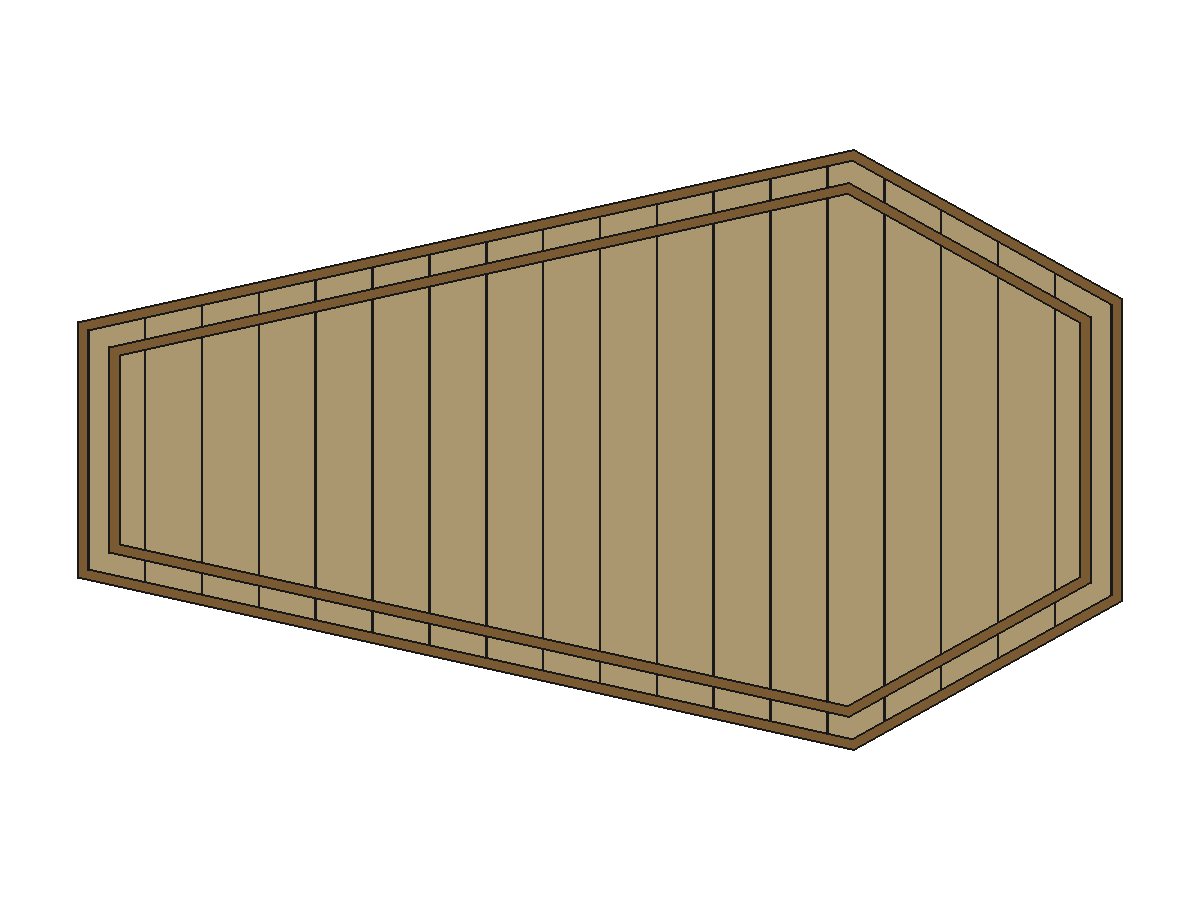
A coffin is not a box with the corners cut off. Its footprint is a real hexagon with three distinct tapers — the head narrows over the shoulders, the foot narrows harder over the legs, and the widest section sits at the upper third of the length. The engine draws this polygon from your three dimensions and then offsets it inward by the wall build to find the true usable interior.

L × W — exterior vs usable walls offset inward by the full wall build HEAD FOOT 0.25L 0.30W 0.70W
Widest line at 0.30–0.70 of the width Head taper0.25L from the ends Interior = polygon offset by wall + 2 × core

The same six vertices — computed from your L, W and H — are used for the frame, the lid and the base. Change the three numbers and every board of the lattice re-derives from this one polygon.

12Proportion Estimator — Drive the Solver

Move the sliders and the widget below runs the same offset-polygon arithmetic the engine performs for your order: it builds the six-vertex footprint, shrinks it by the wall build, and reports the usable interior and volume.

Your three numbers

Footprint shape
Head 520 · Foot 180 mm
taper vertices from L & W
Usable interior
L × W × H
Usable volume
litres
Lining area
interior faces, m²
Fits a person up to
~190 cm
shoulder width ≤ widest interior line

Engine rule: usable interior = the hexagon offset inward by (wall thickness + 2 × core thickness), then height minus base and lid members. The result is exactly the interior volume your blueprint reports.

13Showcase Interiors — Real Computed Volumes

Every interior figure below is the actual value the engine computed for that showcase design — not an estimate:

Build lineExterior L×W×HTimberWall buildUsable volume
Royal Oak — classic slats1900 × 600 × 45022 mmSlats only196 L
Phoenix — recycled build1850 × 580 × 46018–24 mmSlats + lining197 L
Velvet Smooth — sealed MDF1900 × 600 × 45018 mm + 12 liningLining only229 L
Mahogany Vault — heavy sealed2000 × 680 × 52025–37 mmVault (lining)257 L
Heirloom Child — true-scale800 × 300 × 22015 mmSlats only18 L

Notice the sealed lines win on interior space: a lining-only wall is thinner than slats over lining, so less of the footprint is consumed. The volumetric analysis in every order tells your upholsterer the exact usable numbers to cut against.

No one will take you better than yourself —
To the last and only place
The great builder that lived always in you.

The craft, not the casket

THE LAST JOURNEY
PREPARE TO GO WELL

Don't you think there is no better memory — more than any machine — than the preparation of something solid, parametrically engineered to you, precise to go, and completely whole? The pattern survives the carrier. Give us three numbers — length, width, height — and the engine does the rest.

Begin the Preparation