
BOTH ENDS
OF THE
SPECTRUM.
Two of the most demanding sizing problems in woodworking — the heavy-weight adult coffin that must carry great weight with grace, and the small child's coffin whose proportions must stay true at a fraction of the scale. The engine solves both with the same rigour, and this page shows exactly how.
01Two Ends, One Engine
Most coffin builders work from fixed templates, which fail at exactly these two ends of the spectrum. A template sized for an average adult is structurally underbuilt for a heavy person and proportionally wrong for a small child. Our parametric solver has no template — it recomputes every member for the true dimensions, so both problems are solved by the same mathematics, in opposite directions.
02The Heavy-Duty Adult Line
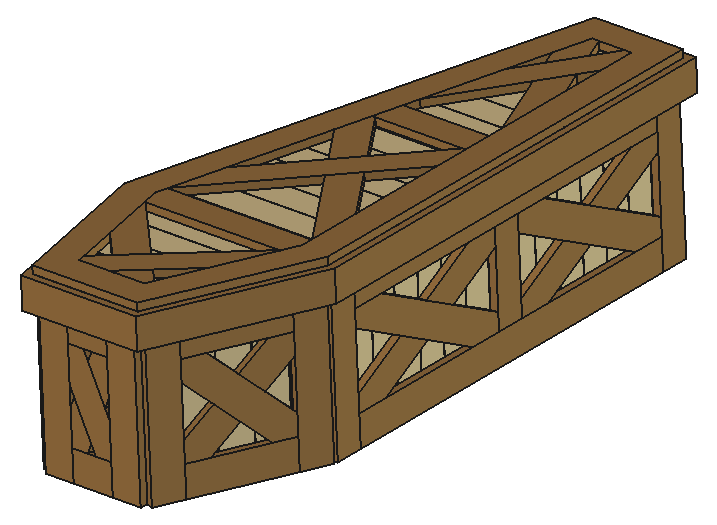
Where a standard adult build works from ~1900 × 600 × 450 mm with 22 mm timber, the heavy-duty line asks the engine for more load, not more bulk. It responds with a structure that carries weight the way a bridge does — through the frame, never the skin:
- Thickened frame members — posts and rims computed from a heavier timber profile, so the load path is wider and stiffer.
- Deepened X-bracing — the head and foot braces are sized and angled so carrying and lowering loads are resisted diagonally, where boards are strongest.
- Reinforced base decking — the floor is decked over full-width runners so the weight is spread across the whole bearing surface, never a single plank.
- Extra bearer clearance — the base geometry leaves clean passages for six to eight bearers, so a dignified crew can carry with correct balance.
The exterior remains a choice: classic slats, slats with lining, or the fully sealed vault — heavy strength never forces a heavy look.
03The Children's Coffin — Delicate by Design
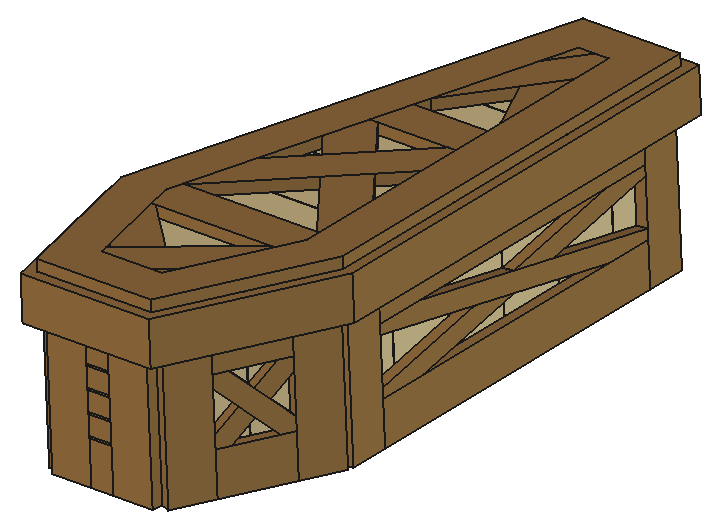
Scale a standard coffin down with a copy machine and you get a miniature that is structurally absurd — 22 mm frame members dwarf a small form, and the proportions read wrong at a glance. The engine therefore re-proportions every member for child dimensions (for example, the 800 mm heirloom line):
- Thinned framing — posts, rims and braces recompute to a delicate timber profile (15 mm and below) so the lattice reads fine and true.
- Correct ratios — lid rise, taper and shoulder width follow the same classical proportions used at adult scale, so the eye sees a coffin, not a shrunken box.
- Gentle handling geometry — the base is scaled for bearers that suit its size, and the weight stays light enough for a small carrying crew.
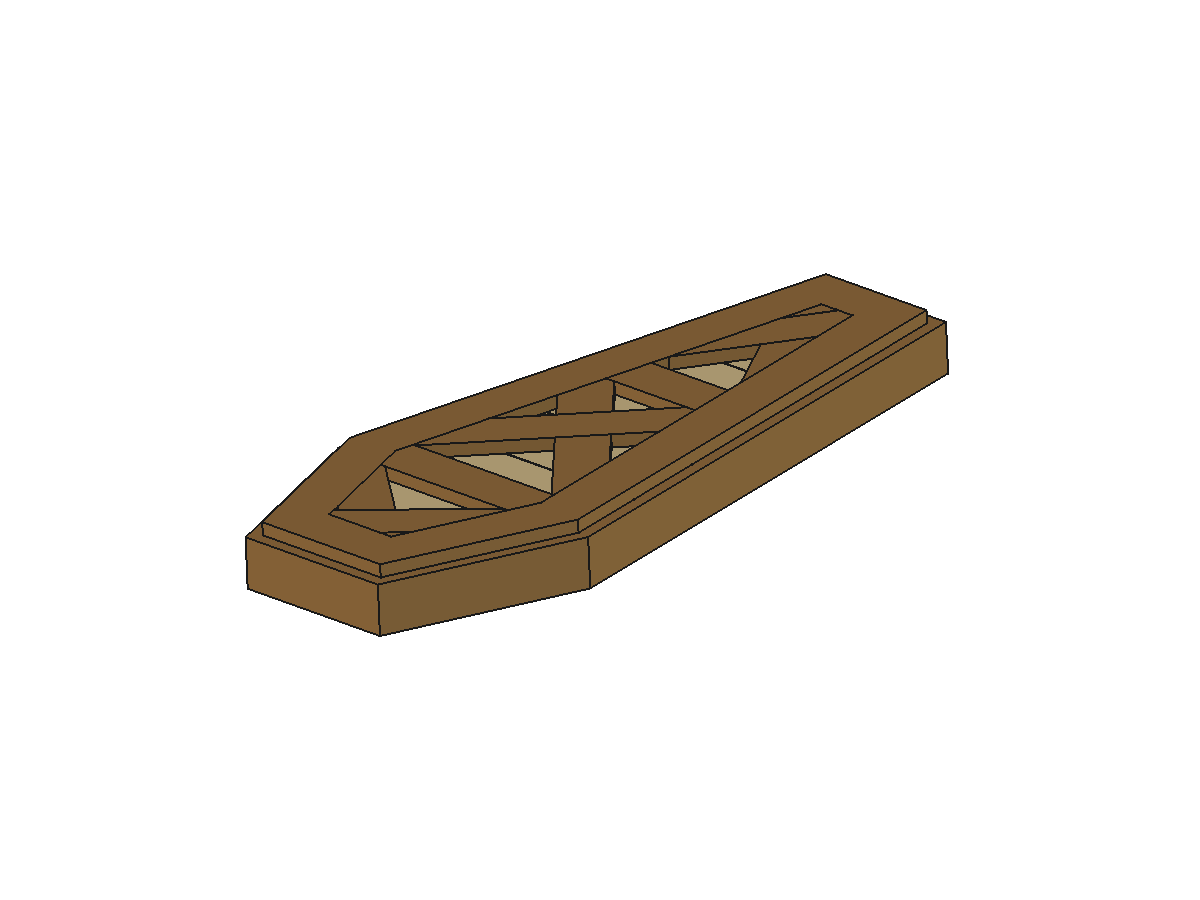
04The Cover, Used Well
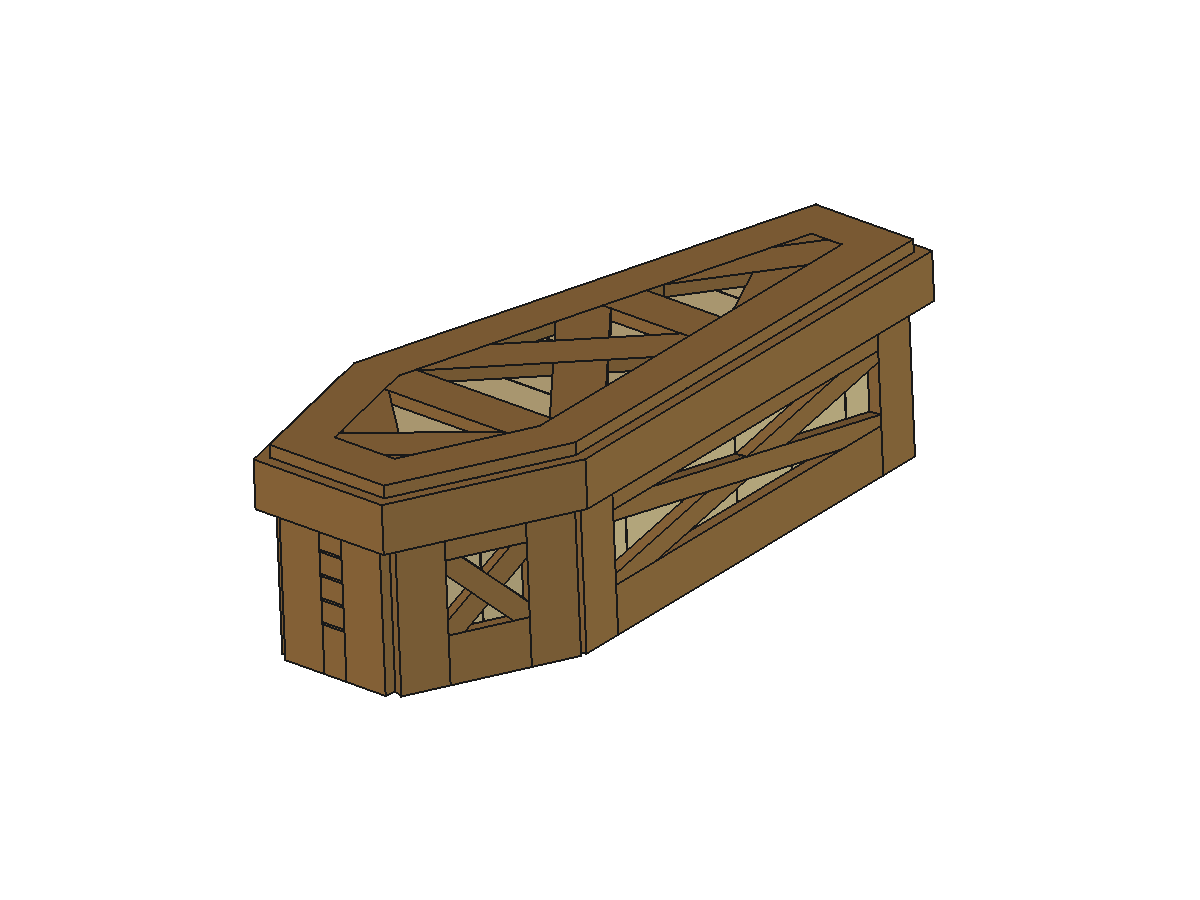
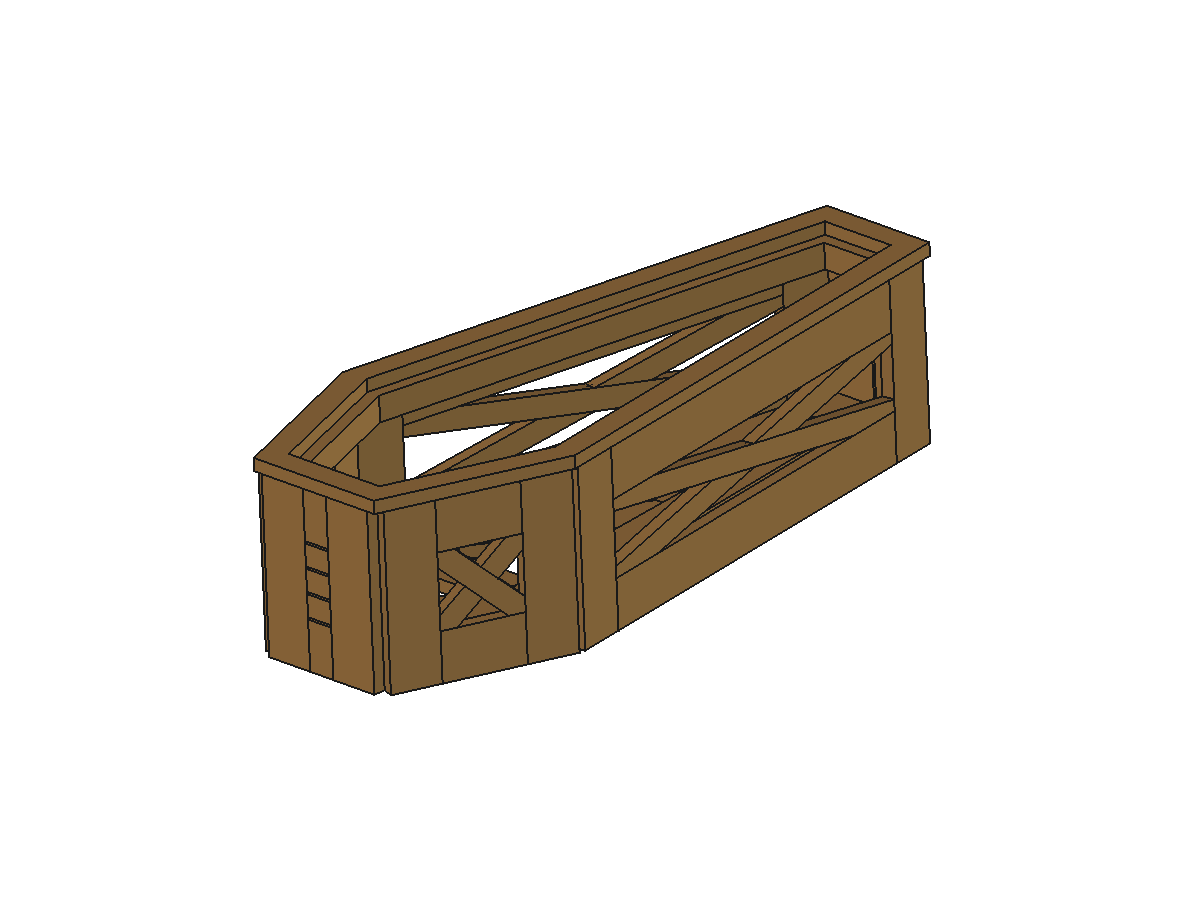
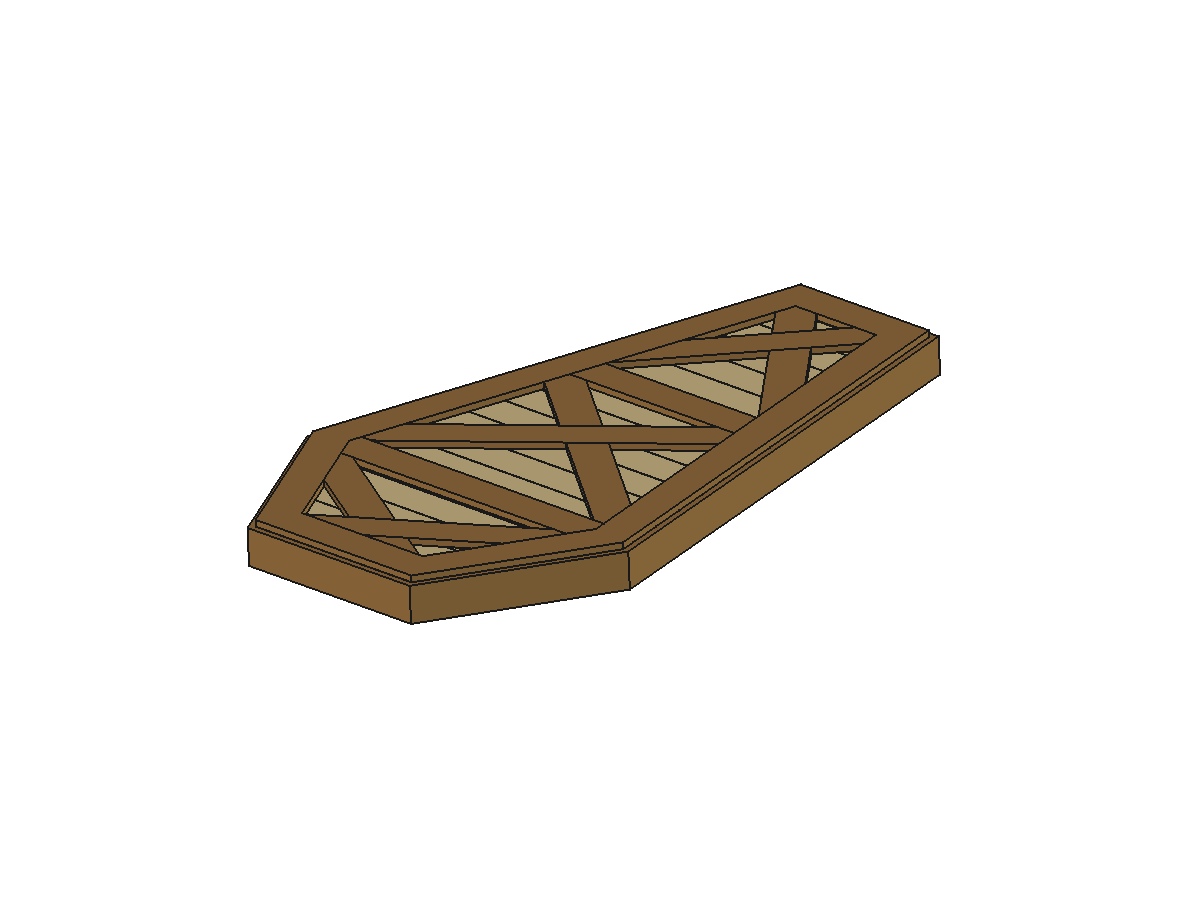
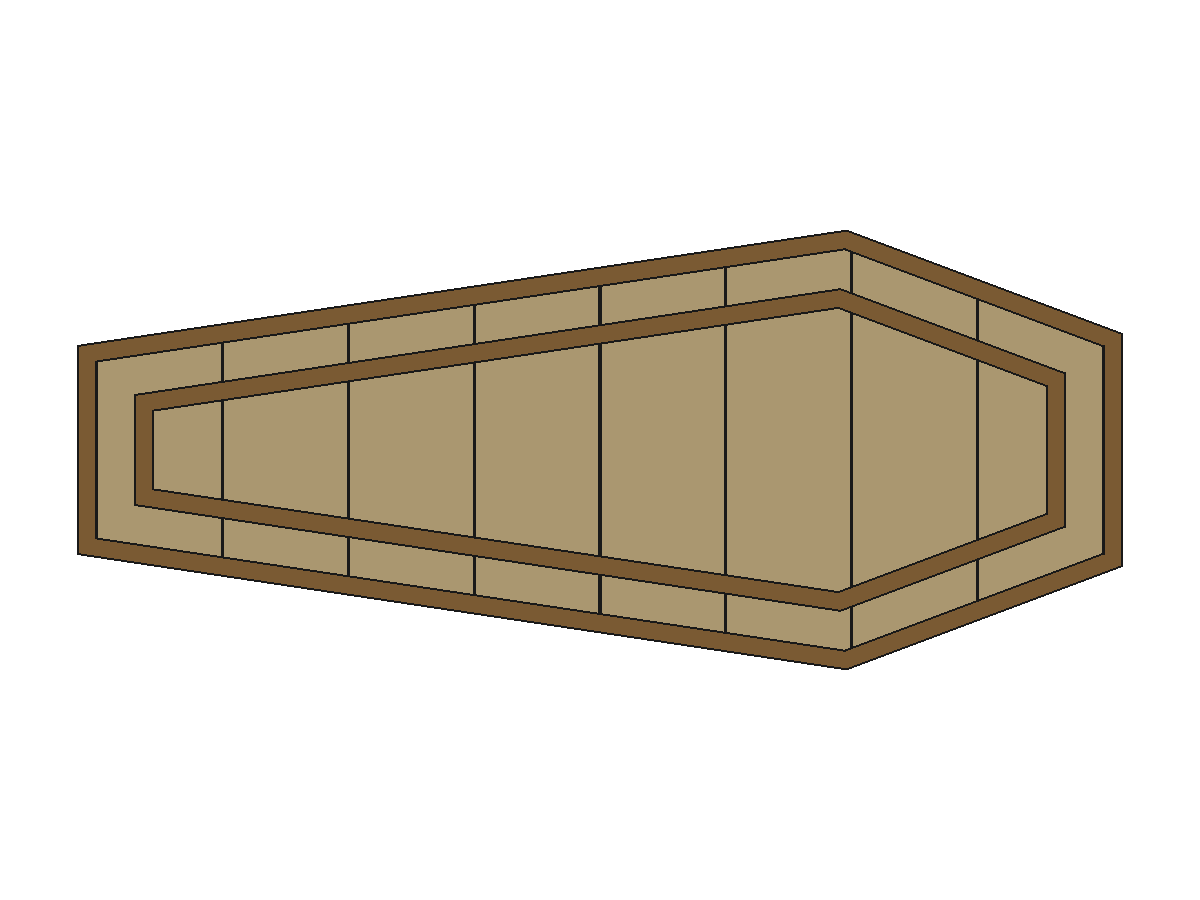
In both lines the lid is engineered as its own structure — top ring, panels, and the gentle rise that gives the silhouette. The detail views below show how the cover is composed in the model; in the workshop it seats on the upper rim, and the blueprint includes both the permanent screw schedule and a temporary-tack option for ceremonies where the lid is closed at the end. The underside of the lid is the natural place for a soft lining, and the blueprint gives the exact panel size so the upholsterer cuts once.
05Materials & Wall Modes
Both lines support the same palette of finishes:
- Slats only — the classic slat-wall coffin, open and honest.
- Slats + lining — exterior slats with a solid interior panel for a smooth, protected interior.
- Lining only / vault — a fully sealed MDF or plywood casket with an unbroken exterior surface.
Timber is your choice — oak, mahogany, pine, MDF, plywood or a scrap inventory the Smart Sorting Engine will allocate for you (see Scrap Wood Builds).
06Finishing & Sealing
Protection coat — Darawell
Mix Darawell with water at a 1:3 ratio and apply one even coat to the assembled interior and exterior before lining. It protects and seals the timber against humidity in every climate — essential when the coffin is held before the ceremony or travels any distance.
Soft sheen — wax oil
After the Darawell cures, two coats of natural wax or hard-wax oil deepen the grain and leave a soft satin finish that is easy to maintain by hand.
07Delivery & The Blueprint
Both lines deliver the complete engineering package by email: a permanent save of the parametric viewer from BuildCrates.com, so you can review the shape of the coffin online at any time — plus the blueprint PDF with cut lists and assembly steps, all render views and the complete design specification — the moment your Bitcoin payment confirms on the blockchain. The interior volumetric analysis in the design specs tells your upholsterer exactly how much room there is to work with.
08The Member Scale — Same Engine, Three Dial Positions
One solver, three outcomes. The engine has no “templates” — it recomputes every member for the true dimensions. The bars below show the real frame-member profiles the engine produced for the showcase designs at each end of the spectrum (values from the actual builds):
The child line thins to 15 mm so the lattice reads fine and true at small scale; the heavy line thickens the core to 25 mm and the wall build to 37 mm (vaulted lining) so the load path widens exactly where weight demands it. Everything in between — braces, lid panels, base decking — scales on the same curve.
09How the Solver Decides
These are the three rules the engine applies at the ends of the spectrum — and the same maths that produce the bars above:
- Cap the frame to the form — the frame width can never exceed roughly half the narrowest side of the footprint (min_side ÷ 2.05). A 220 mm-high child line physically cannot carry 100 mm posts, so the solver thins them to keep the proportions true.
- Thin the bracing with the window — where the wall window is small, the brace width recomputes to a fraction of it, so the arms stay elegant rather than chunky.
- Thicken the core for the load — on the heavy line the declared load and chosen timber push the core and wall build upward; the engine does not add bulk blindly, it widens the actual load path.
Tick “This is for a child” in the generator and the child rules engage automatically; specify heavier timber or a larger declared load and the heavy rules engage. Same solver, same mathematics — opposite ends of the dial.