
FROM PALLETS,
PRECISION.
Give the engine your pile of leftover boards — pallet rests, off-cuts, deconstructed pallets — and it will answer with the strongest crate those boards can possibly form. This is the Smart Sorting Engine at work: nothing wasted, nothing undersized, every joint computed.
01The Philosophy — Nothing Wasted
Wood that is “scrap” in one workshop is stock in another. Pallet boards are real timber — typically 100 mm wide and 18 mm thick — and, sorted intelligently, they carry real loads. The philosophy of the scrap line is simple: the strongest member goes where the strongest member is needed, and nothing is cut until the computer has decided exactly what each piece is for.
This is not just economy — it is also the most sustainable way to build: reclaimed wood, zero waste, and a crate with a story. When you choose the scrap source, the engine reads your real inventory and does the woodworking arithmetic for you.
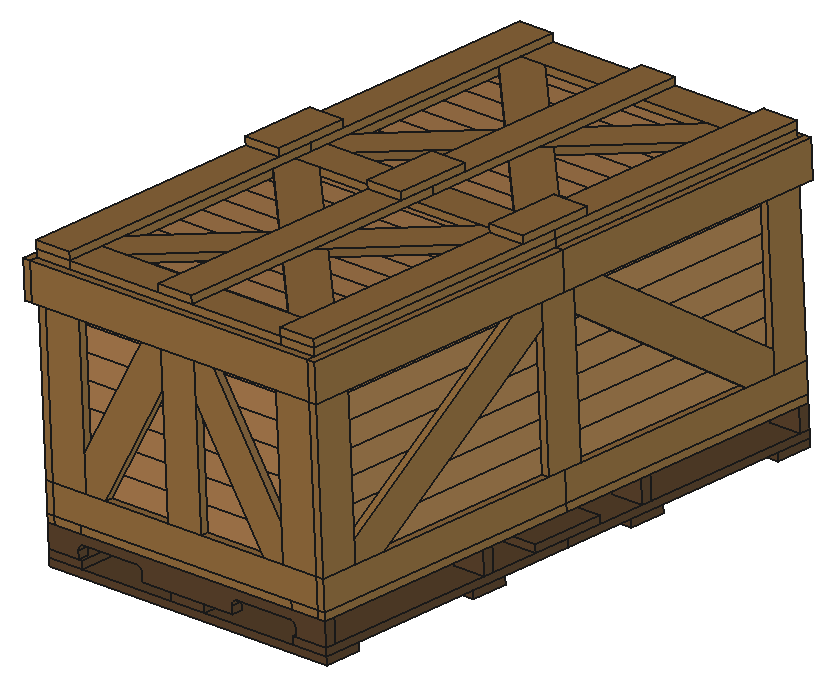
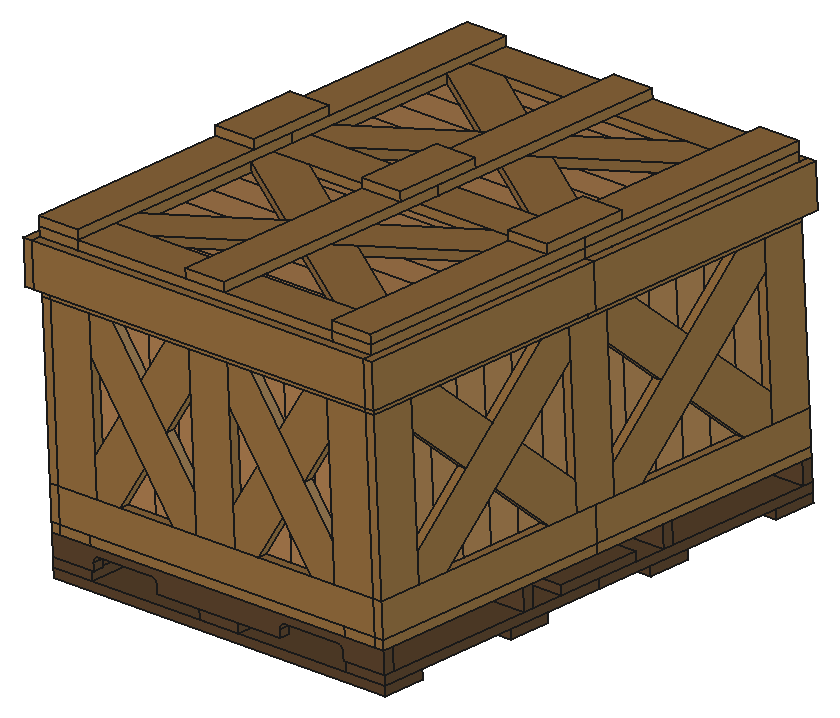
02From Pallet to Stock — The Recovery Process
Every scrap build begins long before the generator — in a yard, a warehouse corner, or the loading dock of a business that goes through pallets by the dozen. The recovery process has three stages, and each one feeds directly into a field of the generator, so the computer knows exactly what timber you are putting on the table before it plans a single cut.
Recollecting Pallets
Gather the pallets themselves — from deliveries, neighbours, industry or your own stock. A standard euro pallet carries roughly seven metres of usable 100 × 18 mm board, so a small stack of pallets is already a serious inventory. Collect with intent: choose pallets with straight, crack-free stringers and clean faces, and set aside the damaged ones for the pieces that only need to become decking.
Pallet Disassembly
Break each pallet down into its raw boards. A good technique is the sledgehammer-and- pry-bar method: strike the stringer joints to pop the nails loose rather than cutting through them, which saves millimetres of board on every end. Sort as you go — keep the stringers (the thick, strong runners) separate from the deck boards (the thinner top slats). Remove every nail, staple and broken end now, while each piece is in your hand, so the pile you measure later is clean timber.
Classification — Grouping the Same Parts
Now measure and sort the recovered boards into standardized families of identical dimensions. A pallet pile usually collapses into a handful of repeats: 1200 × 100 × 18, 800 × 100 × 18, maybe a run of thick stringers at 1200 × 90 × 40. Each family is one class — and the classes are exactly what the engine needs to allocate every member of your crate.
From here the Smart Sorting Engine (next section) takes over — and the Blueprint PDF closes the loop: it shows you the final plan as a cut list per recovered class, so every board you collected, disassembled and classified appears in the build, none wasted, none unplanned.
03The Smart Sorting Engine
When you select a scrap source, the engine activates a mathematical allocation pass over your inventory. Each piece is described by three numbers — thickness, length and width — and the solver routes them with a clear set of rules:
- Thickest and widest pieces are selected for the load-bearing frame — posts, rims and skids, where strength matters most.
- Thinnest pieces are routed to the slats and decking, where weight matters more than strength.
- Splice joints are computed where pieces must be joined end-to-end to reach full length, with scab reinforcement plates placed automatically at the seams.
- Minimum segment rules are respected — every span keeps solid wood at its ends and centre spine, so no joint ever lands where it would weaken the structure.
In effect, the engine simulates an expert woodworker sorting the pile by hand — except it considers every possible allocation at once and chooses the optimum.
04Splicing — When Boards Must Grow
Short boards are not a limitation; they are an engineering input. Where a wall span exceeds the longest available piece, the engine computes a splice: the two boards meet end-to-end and are reinforced by a scab plate (200 mm overlap by default) screwed and glued across the seam. The blueprint marks every splice location so the workshop can stagger them between adjacent rows — never two seams on the same line, never a seam near a post or a rim joint.

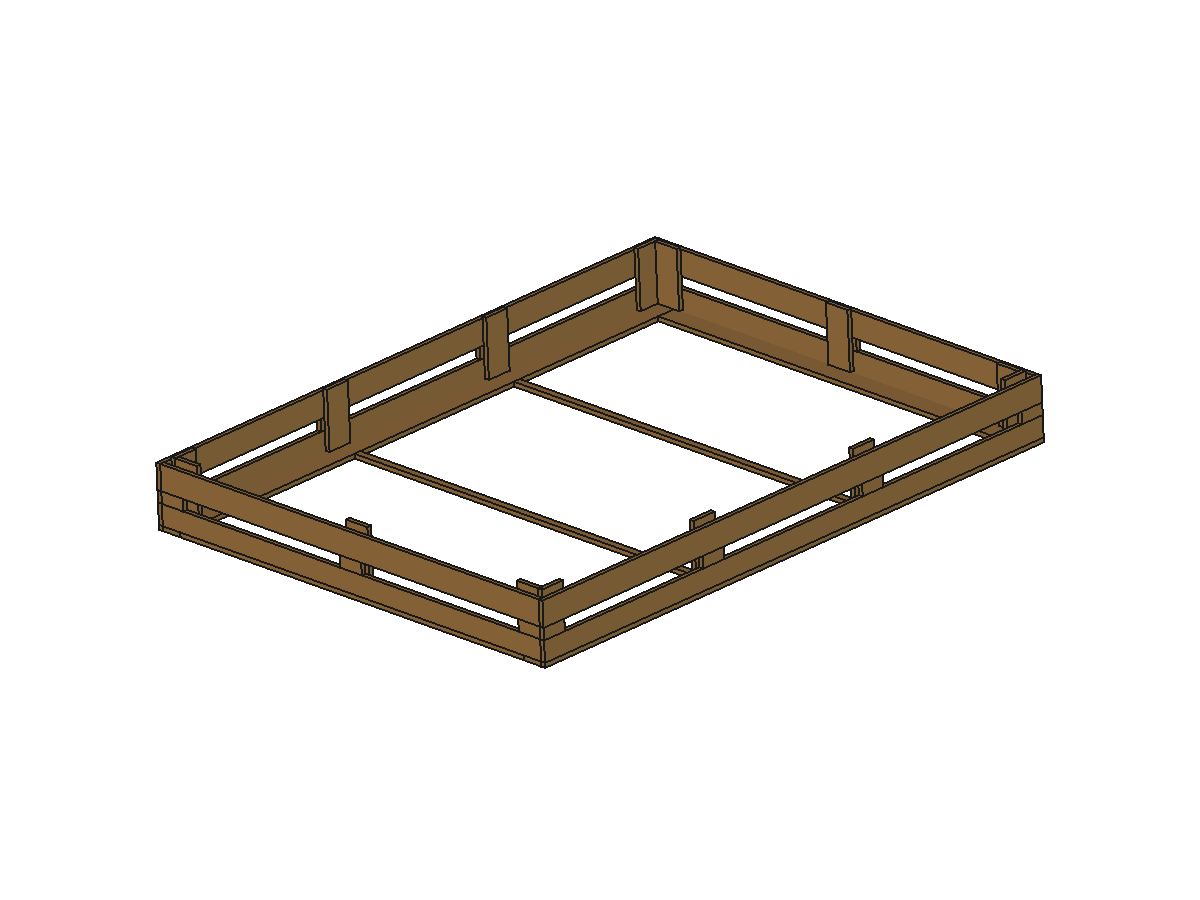
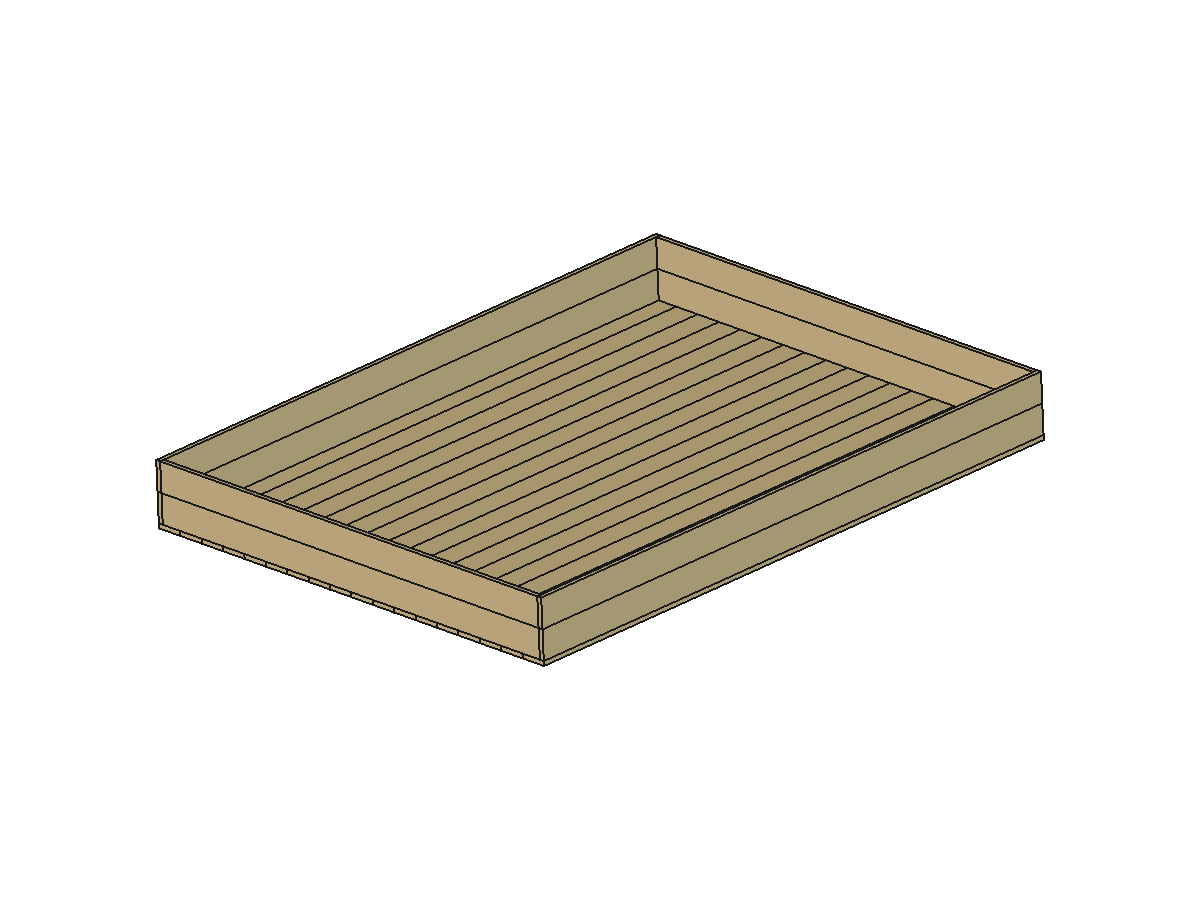
05Wall Modes From Scrap
The three wall modes work identically on scrap stock:
- Slats only — the classic result: a crate that looks like honest, hardworking wood.
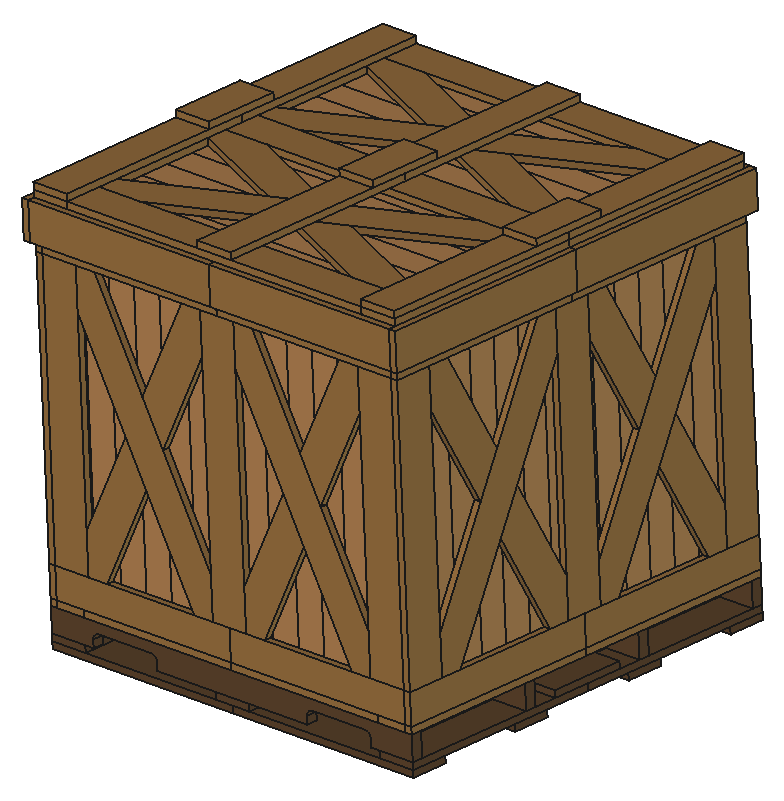
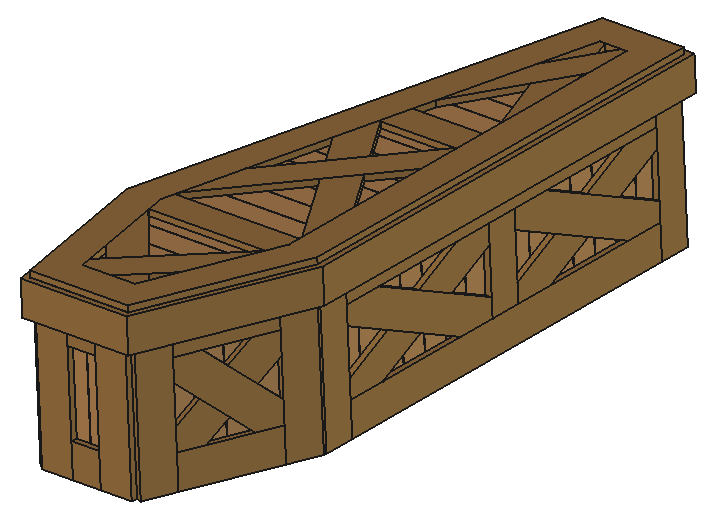
- Slats + lining — scrap slats outside, a solid panel lining inside; the Armadillo vault is exactly this, and it is one of the strongest builds in the showcase.
- Lining only — a solid box, typically from reclaimed sheet off-cuts.
Combine with vertical or horizontal slats and optional X-bracing; the engine allocates the inventory accordingly.
08Try the Smart Sorter — Your Pile, Live
Enter the recovered classes you have on the bench — up to the same ten classes the generator accepts — and watch the Smart Sorting Engine apply its three allocation rules live: thickest and widest pieces to the load-bearing frame, thinnest to the slats and decking, and splices computed wherever a span outgrows the longest piece.
Your recovered inventory
Each class = one standardized family of identical boards, exactly as the generator's inventory dial records them. Units are millimetres.
Engine rule: frame width = widest class, core thickness = thickest class, slats = thinnest class. Splice scab overlap is 200 mm by default, and the blueprint staggers seams so no two land on the same line.
06Preparing Reclaimed Wood
A little preparation makes scrap timber behave like new — and last like it:
- De-nail and de-staple every board; remove broken ends and deep cracks beyond the computed splice points.
- Check moisture — pallet wood that has lived outdoors wants time to dry; the joints in the blueprint assume reasonably dry stock.
- Square the edges where the blueprint requires full-face joints; the scab plates forgive small irregularities, the frame joints do not.
Seal the reclaimed surface — Darawell
Reclaimed wood is thirsty: mix Darawell with water at a 1:3 ratio and apply two coats to every face. The first coat soaks into the weathered grain; the second seals it. This protects and seals the crate against humidity and evens out the patchwork of old finishes before the exterior coat.
07The Blueprint Package
Every scrap build delivers the complete engineering package by email: a permanent save of the parametric viewer from BuildCrates.com, so you can review the shape of the build online at any time — plus the blueprint PDF with the splice and scab schedule (so the workshop knows exactly where every joint goes), all render views and the complete design specification — the moment your Bitcoin payment confirms on the blockchain.